

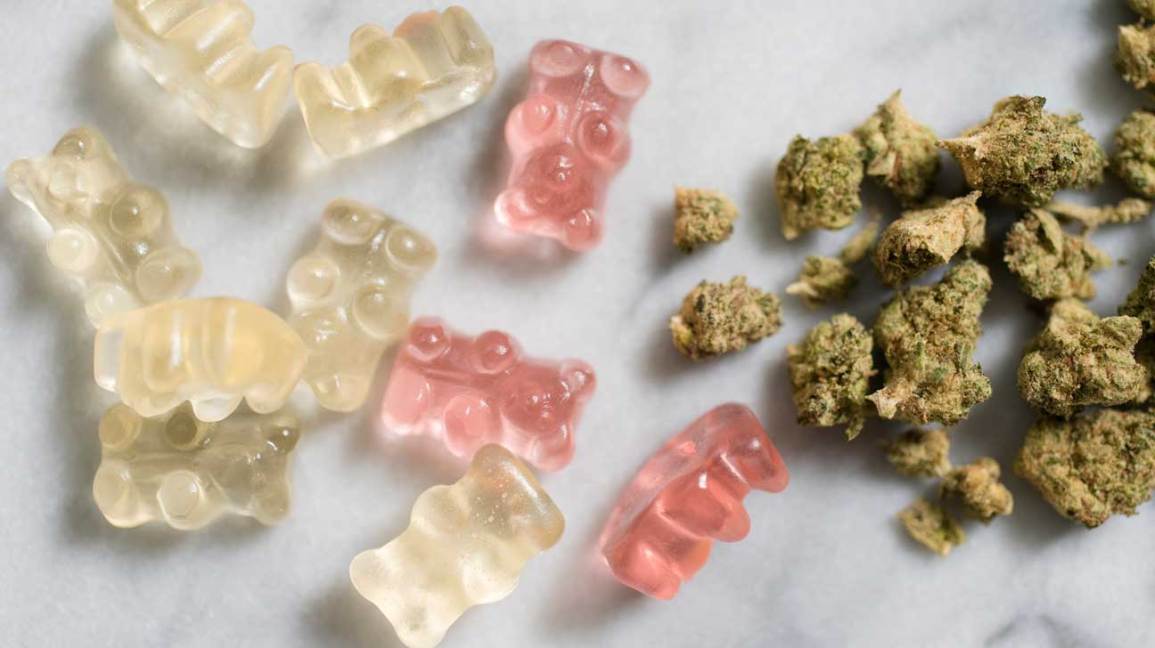
Yes, you “can you eat weed,” but eating raw cannabis won’t result in a “high.” The plant contains THCA, which only becomes the psychoactive THC through decarboxylation (exposure to heat). While raw cannabis is often used in smoothies for its anti-inflammatory “superfood” properties, you won’t experience any mind-altering effects unless the flower has been properly heated/baked first.
When cannabis is properly prepared with heat and eaten as an edible, the effects are real – but they work very differently from smoking. Understanding those differences matters, because edibles catch a lot of people off guard.
The Science in Plain English
Raw cannabis contains THCA (tetrahydrocannabinolic acid) – the precursor to THC. THCA is non-psychoactive. When you apply heat (cooking, baking, vaporising), THCA loses a carboxyl group and becomes THC – the compound that produces the ‘high’.
This conversion is called decarboxylation (or ‘decarbing’). It’s why cannabis butter or oil is heated first, why you can’t just eat a raw flower and expect to feel anything psychoactive, and why accidental edible consumption (like a child eating a raw plant in a garden) doesn’t cause intoxication the same way an edible would.
Edibles vs. Smoking: How the Experience Differs
| Factor | Edibles | Smoking / Vaping |
|---|---|---|
| Onset time | 30 minutes to 2 hours | Within minutes (2-10 min) |
| Peak effects | 2-4 hours after ingestion | 30-60 minutes |
| Duration | 4-8 hours (sometimes longer) | 1-3 hours |
| Intensity | Often stronger, harder to control | Easier to gauge and stop |
| Bioavailability | 10-20% of THC absorbed | 50-60% absorbed via lungs |
| Lung risk | None | Respiratory irritation possible |
| Overconsumption risk | Higher (delayed onset leads to re-dosing) | Lower (effects felt immediately) |
| Metabolism | Liver converts THC → 11-hydroxy-THC (stronger) | Inhaled THC direct to bloodstream |
Common Edible Forms
- Cannabis butter (cannabutter): made by infusing butter with decarbed cannabis – used in baking
- Cannabis oil: infused into coconut oil or olive oil – versatile for cooking
- Gummies and sweets: commercially produced with measured doses – easier to control
- Capsules: measured dose in pill form – discreet, no taste
- Baked goods: brownies, cookies, etc. – harder to dose consistently when homemade
- Tinctures: cannabis extracted into alcohol – placed under the tongue for faster absorption than food
Why Edibles Catch People Out – and How to Avoid It
The most common mistake with edibles is impatience. You eat something, feel nothing after 45 minutes, assume it’s not working, and eat more. Then both doses hit at once – typically 90-120 minutes after the first.
This has become common enough that it’s sometimes called the ‘green-out’ – an experience of being uncomfortably, intensely high from overconsumption. It’s not physically dangerous for healthy adults, but it can be extremely unpleasant: racing heart, anxiety, confusion, nausea.
- Start with a low dose: 2.5-5mg of THC for new users
- Wait at least 2 hours before considering another dose
- Don’t mix with alcohol – it significantly amplifies the effects
- Eat something beforehand – a full stomach slows absorption, an empty stomach speeds it up (and intensifies it)
What About Eating Raw Cannabis Leaves?
Eating raw cannabis leaves and flowers without decarboxylation won’t produce psychoactive effects. However, raw cannabis does contain THCA, CBD, and other cannabinoids in their acid forms, as well as fibre, chlorophyll, and some antioxidants.
Some people add raw cannabis leaves to smoothies or salads for the nutritional content. There’s emerging research into THCA having anti-inflammatory and neuroprotective properties in its raw form – distinct from the psychoactive effects of THC. This is an area of early research, not established medical guidance.
Safety and Drug Interactions
- Cannabis interacts with blood thinners, some antidepressants, and sedatives – check with a doctor if you’re on medication
- People with a personal or family history of psychosis or schizophrenia are advised to avoid high-THC cannabis
- Pregnant or breastfeeding individuals should avoid cannabis in all forms
- Edibles are not safe to drive after consuming – effects last longer and can be unpredictable
Legal note: Cannabis is legal for recreational or medicinal use in many countries and US states, but remains illegal in others. The legality of possession, purchase, and consumption varies significantly by location. Check local laws before purchasing or consuming.
