

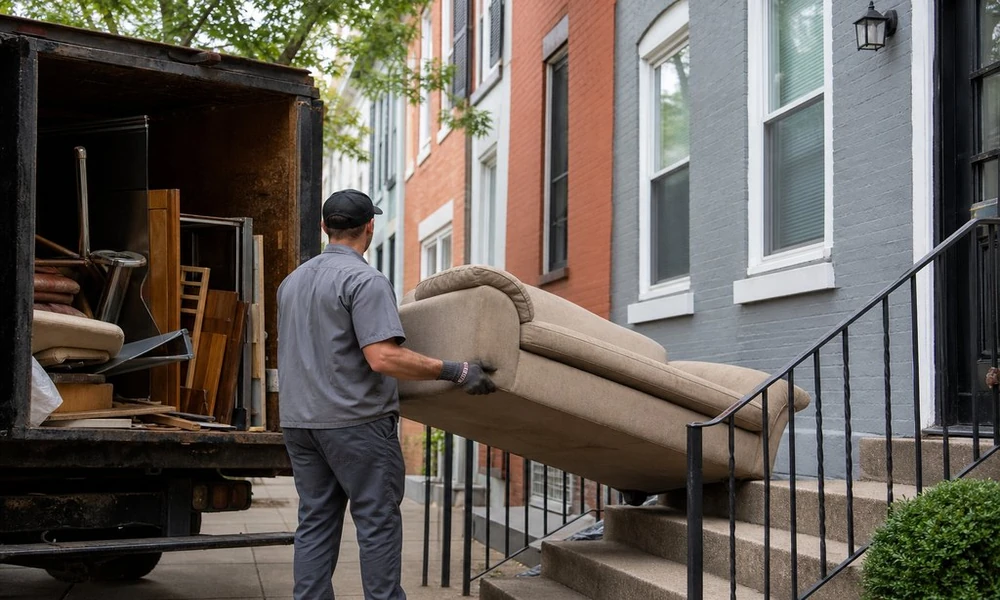
Household junk and moving boxes
Junk and the 48-Hour Reset Before a Rowhome Move
Your sale listing is already live and there are still unopened boxes stacked in the hallway. A dresser is jammed into the corner by the basement steps. There’s a cage full of storage bins of indeterminate origin. There’s junk in the attic that belonged to your aunt and nobody wants to decide what to do with it. Sound familiar?
Clutter doesn’t just collect dust in a Philadelphia rowhome, it can balloon into a major headache in a hurry. Especially when you’ve got a deadline to move out.
The goal of a quick clearout isn’t to throw out everything you own. It’s to create some breathing room in your house, sort out what you want to keep from what you don’t, and figure out what should be hauled away so your move, lease turnover, or showing isn’t derailed.
Basements and Stairwells
Start With the Basement
In many rowhomes, the basement is where all the odds and ends go to live: Holiday decorations, paint cans, tools, old electronics, a busted-up chair, boxes that have traveled with you from move to move but never get unpacked. Caring Transitions covers the practical side of decluttering company in Philadelphia if you want that route. Sometimes the basement is the only place in your cramped abode where you can stash things, too, which means you’re not going to want to fill it with stuff you’re trying to get rid of!
Here are some things you can do to get a jump on your junk dilemma before you have to usher in the junk removal crew:
- Stash valuables and important belongings. This is self-explanatory, but before anything gets tossed, make sure any potentially valuable or irreplaceable items are out of the way. Documents, photos, keys, small heirlooms, and other mementos and valuables should all be corralled somewhere safe.
- Take photos of anything that needs sorting out. If you’re dealing with clutter that belongs to someone else, say, after a death in the family, consider photographing items that may be of sentimental value to family members or that may spark a family discussion. Same with anything you’re unsure about keeping or selling.
- Triage junk with these five categories: keep and move, donate (if wanted), recycle/dispose, ask family, remove now. Resist the temptation to agonize over whether you might one day use that box full of extension cords, the point of this exercise isn’t to make every last decision, it’s to free up space and identify problem areas that may warrant further discussion.
Narrow Stairwells
You may have noticed some large furniture or other awkward items you know you’ll need help removing. That’s great, but before the pros show up, keep these things in mind:
- Measure if you can. If you know exactly where your problem piece is and have the time, take some measurements of your item as well as doorways, staircases, and hallways it will need to travel through.
- Flag problem areas. Can’t take exact measurements? That’s okay! Just do your best to call out problem spots for the crew, like tight corners, low ceilings, narrow landings, and so on.
- Clear the clutter. Anything that’s not important and isn’t staying with you, boxes, bags, shoes, etc., should be cleared off the staircase and landing areas. If you’re dealing with removal from the floor above, it’s a good idea to clear breakables, too. We see it all the time: Customers focus on getting that couch downstairs without a scratch, but forget to mention the framed mirror/shelf/light fixture/etc. directly above the carrying route. Oops.
- Figure out what you need to keep handy. Odds are there are some items you absolutely can’t afford to have hauled away before you’re ready, school or office supplies, medicine, documents you’ll need for closing, a suitcase, etc. Stash them in one easily accessible and identifiable place, and keep that room out of bounds when it’s time to do your junk triage!
Garages and Attics
Mixed Garage Storage
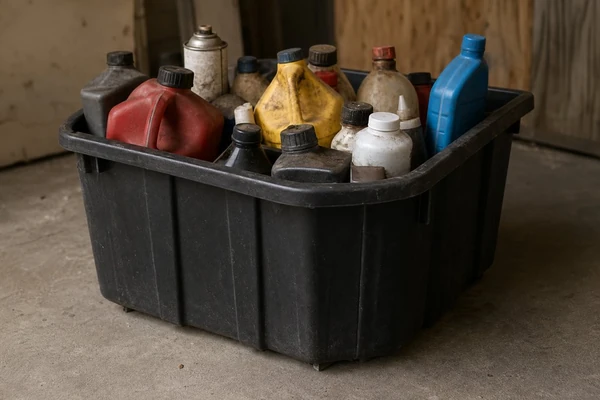
Stored household items in a garage
If there are any restricted or hazardous materials (bookmark https://www.epa.gov/hw/learn-basics-hazardous-waste if you want the longer version) among your garage detritus, corral those into a separate pile and let the crew know when they get there. Again, if you’re not sure, take pictures and send them over ahead of time!
Pickup and Handoff
Curbside Pickup
Curbside junk removal may seem easy-peasy, but not all unwanted items are curbside pickup eligible. Depending on where you live, you may need to check in with the city to figure out what can be placed curbside, if there are specific days/times curbside placement is allowed, whether or not special pickups need to be arranged, etc. If you’ll be working with a crew to get rid of stuff, be sure the route from the door to the vehicle is clear, pets are secured, and anyone helping with loading is aware of any potentially tricky access issues (i.e. alleys, stairs, tight spaces, etc.).
The Final Walkthrough
When it’s all said and done, it’s okay if the home isn’t immaculate (more on that here!), but you will want to walk away from a cleared-out space, one with accessible rooms, clear hallways, and a definitive divide between what’s staying and what’s going. One last look through for important items, documents, medications, etc. before the crew gets there will ensure nothing essential gets left behind!
